
When the temperature in Minneapolis drops below zero, everything about driving gets harder. Metal contracts, rubber stiffens, fluids thicken, and batteries lose power just when the engine needs it most. A car that starts without a thought in October can sit dead in the driveway on the first brutal January morning. The good news is that reliable winter driving comes down to a handful of habits and a few smart checks. This guide shares practical cold weather car care tips for Minneapolis drivers, explains what extreme cold does to your vehicle, covers how a block heater works, and shows how a mobile mechanic can help you stay on the road when the temperature plunges.
What Sub Zero Cold Does to Your Car
Cold changes how nearly every part of a vehicle behaves. Engine oil gets thicker and flows more slowly, which means more friction during startup. The battery produces less power, and the starter needs more of it to turn a cold, stiff engine. Rubber hoses, belts, and seals become less flexible and more likely to crack. Tire pressure drops as the air inside contracts. Moisture can freeze in door locks, seals, fuel lines, and washer systems. Each of these effects is small on its own, but together they explain why so many breakdowns happen on the coldest mornings. Knowing what to watch gives you a head start.
Take Care of the Battery First
The battery is the most common reason a car will not start in extreme cold. Low temperatures slow the chemical reaction inside it, so a battery that is weak, old, or poorly charged can fail suddenly. Signs of trouble include slow cranking, dim headlights, a charging warning light, corrosion on the terminals, and a battery that is several years old. Short trips make things worse, because the battery may not get enough time to recharge. Have the battery and charging system tested before the deepest cold arrives. Our article on extreme cold starts and why Minneapolis cars need winter ready batteries explains this in more detail. If your car does not start at all, our guide to the top 10 reasons your car won’t start and how to get back on the road covers the common causes.
What Is a Block Heater and Do I Need One?
A block heater is a small electric heating element that warms the engine or its coolant while the car is parked. When you plug it into a standard outdoor outlet, it keeps the engine warmer than the surrounding air, which makes starting easier and reduces wear during a cold start. In very cold climates, block heaters are a common feature, and some vehicles come with one from the factory. Others can have one installed, and there are other styles of engine and battery warmers as well.
Whether you need one depends on your vehicle, your garage situation, and how cold it gets where you park. A few points are worth keeping in mind:
- Not every car has a block heater, so check your owner’s manual or ask a technician
- If your car has one, inspect the cord and plug for cracks, fraying, or damage before the season
- Use a proper outdoor rated extension cord that is in good condition, and follow the manufacturer’s instructions
- A timer can turn the heater on a few hours before you leave, which saves energy compared with running it all night
- Installing one can be a larger job on some engines and may need a shop
A technician can tell you whether a block heater makes sense for your car and test an existing one to confirm it works.
Use the Right Oil and Keep It Fresh
Oil matters a great deal in the cold. Thick oil flows slowly, and the engine can run for a moment without full lubrication. Your owner’s manual lists the oil viscosity recommended for your engine and for different temperature ranges, and following it is the best way to protect the engine. Many drivers use synthetic oil in extreme cold because it tends to flow better at low temperatures, though you should use whatever your manual specifies. Winter driving with many short trips and cold starts counts as severe service, which often calls for more frequent oil changes, so check the schedule in your manual.
Check the Coolant
Coolant, or antifreeze, protects the engine from freezing and overheating. Old or diluted coolant loses its protection, and a frozen cooling system can crack parts and cause serious damage. Your owner’s manual lists the right type and mixture. A technician can test the coolant’s condition and protection level, inspect the hoses and clamps for leaks, and flush and refill the system if needed. A heater that blows weak or cool air can be a sign of a cooling system problem, so do not ignore it.
Keep Your Tires Ready for Snow and Ice
Tires matter more in winter than at any other time. Cold air reduces tire pressure, so check it regularly, using the pressure on the label inside the driver’s door jamb or in your owner’s manual. Look at the tread depth, since worn tires lose grip fast on snow and ice, and check for cracks, bulges, and uneven wear. Many Minneapolis drivers use dedicated winter tires because the rubber stays flexible in the cold and the tread is designed for snow. If you stick with all season tires, make sure they are in good shape and ask a tire professional whether they suit the way you drive. Keep the spare, jack, and lug wrench in the car and in working order.
Inspect the Brakes
Stopping on snow and ice takes longer, so you want your brakes in the best condition possible. Salt and moisture also encourage rust on rotors, calipers, and brake lines. Pay attention to squealing, grinding, a soft pedal, pulling to one side, or vibration, and have any of these inspected. Brakes are a safety system, so when you are not sure, have them looked at. On slippery roads, leave extra following distance and brake early and gently.
Wipers, Washer Fluid, and Visibility
Winter spray from other vehicles and long dark mornings make visibility a real concern. Replace worn wiper blades, and consider winter blades designed to resist ice buildup. Fill the washer reservoir with fluid rated for freezing temperatures, and keep extra in the car. Check the headlights, tail lights, brake lights, and turn signals, and keep the lenses clean of salt film. Test the defroster and the rear defogger. Clear all snow and ice from the whole vehicle, including the roof, hood, and lights, before you drive.
Protect the Doors, Locks, and Seals
Moisture freezes in door seals and locks, leaving doors stuck shut and keys that will not turn. Wiping the rubber seals dry and applying a silicone based rubber protectant can help keep them from sticking. A lock lubricant made for cold weather can help with frozen locks. Avoid pouring hot water on a frozen windshield or lock, since a sudden temperature change can crack glass. Use a scraper and the defroster instead.
Keep the Gas Tank Fuller
Many drivers keep the tank at least half full in winter. It limits moisture buildup in the tank, which can freeze in fuel lines, and it gives you more options if you get delayed or stuck. A fuller tank also lets you run the engine for heat in an emergency, as long as you are in a safe, open area and the tailpipe is clear of snow.
Starting and Warming Up a Cold Car
Modern engines do not need long idling. Your owner’s manual explains what is recommended, but in general it is best to let the engine run briefly and then drive gently until it warms up. Turn off extra electrical loads, such as the heated seats, the rear defogger, and the radio, while you start the car, so more power goes to the starter. If the car cranks slowly, do not keep cranking for a long time, since you can drain the battery. Never run a car in a closed garage, because exhaust fumes are dangerous.
Fight Road Salt
Salt keeps roads safer, but it is hard on vehicles. It speeds up rust on the underbody, brake lines, fuel lines, exhaust parts, and body panels, and it can damage paint and electrical connections. Washing the car during winter, including the underside when conditions allow, removes salt before it does damage. Wax or sealant gives the paint a layer of protection. Have the underbody and brake lines checked from time to time, since corrosion on those parts is a safety concern.
Pack a Winter Emergency Kit
- A snow brush, ice scraper, and small shovel
- Sand or cat litter for traction
- Jumper cables or a portable jump starter
- A flashlight with extra batteries
- Warm blankets, gloves, a hat, and extra layers
- Water and non perishable snacks
- A phone charger and a charged phone
- Reflective triangles or flares, and a basic first aid kit
If you get stranded in extreme cold, stay with your vehicle when it is safe, call for help, and make sure the tailpipe stays clear of snow before running the engine for heat.
A Quick Cold Weather Checklist
- Battery and charging system tested
- Block heater or engine warmer checked, if your car has one
- Oil changed on schedule, using the grade your manual lists
- Coolant at the right level and protection
- Tires at the correct pressure, with good tread and a usable spare
- Brakes quiet and responsive
- Wipers replaced and washer fluid rated for freezing temperatures
- Lights working and lenses clean
- Gas tank kept at least half full
- Emergency kit stocked
Can a Mobile Mechanic Help in Extreme Cold?
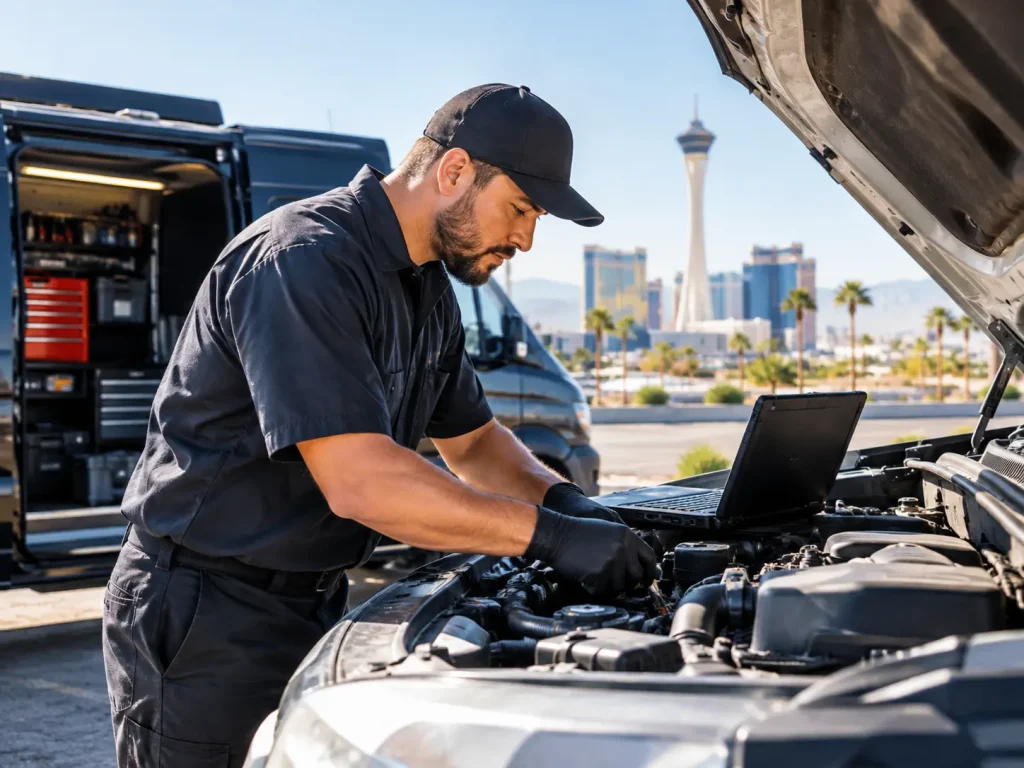
In many cases, yes. A mobile mechanic can come to your home or workplace in the Minneapolis area, test the battery and charging system, inspect the tires, brakes, belts, hoses, and fluids, check an existing block heater, and handle many common repairs on site, such as battery replacement and wiper replacement. That is a real advantage when the last thing you want is to wait in a cold parking lot. Some jobs, such as installing a block heater on a difficult engine, major brake work, or repairs that need a lift or specialized equipment, may need a full shop, and a trustworthy technician will tell you honestly when that is the case. When you book, share your vehicle’s year, make, model, and mileage, and mention anything you have noticed, such as slow starts, weak heat, or warning lights.
Be Ready Before the Deep Freeze
Cold weather car care is about preventing the kind of morning where nothing works. A battery test, a look at the tires and brakes, fresh fluids, and a stocked emergency kit can keep you moving through the coldest stretches of the year. If you have not had your car checked this season, now is the time.
To learn more about our services, visit our homepage. If you would like your car ready for the cold, reach out through our contact us page and we will come to you anywhere in the Minneapolis area.