
Minneapolis winters do not ease into cold gradually the way some climates do. When an arctic air mass settles over Minnesota, temperatures can plunge to twenty or thirty degrees below zero for multiple consecutive days, and that kind of sustained, genuine extreme cold is a different challenge entirely from the milder freezing temperatures many other parts of the country experience. Batteries bear the brunt of this reality more than almost any other vehicle component, and understanding exactly why sub zero mornings push an aging battery past its limit helps Minneapolis drivers avoid getting stranded when the cold is at its worst.
Why Sub Zero Cold Is Fundamentally Different From Ordinary Winter Cold
A battery’s ability to deliver power depends on a chemical reaction between the battery’s plates and the electrolyte solution inside it, and this reaction slows down as temperatures drop, but the relationship is not a gentle, linear decline. At around zero degrees Fahrenheit, a typical battery has already lost roughly half of its rated cranking power compared to how it performs at seventy degrees. Minneapolis winters regularly push well past zero into genuinely negative territory, and at twenty below, a battery can be operating with only a fraction of its original capacity, precisely the range where a battery that seemed to be managing fine at ten or fifteen degrees suddenly cannot produce enough power to start the engine at all.
This is why so many Minneapolis batteries seem to fail specifically during the coldest arctic outbreaks rather than during the more routine cold of an average December day. The battery was never actually fine, it was simply operating with a shrinking margin that only became visible once temperatures dropped far enough to expose it.
Why Cold Makes Starting Harder From Every Direction At Once
Extreme cold does not just weaken the battery, it also thickens engine oil, increasing the resistance your starter has to overcome to get the engine turning in the first place. This means a Minneapolis battery facing a sub zero morning has to produce near maximum cranking power at exactly the moment its actual capacity has dropped the most, while simultaneously fighting against an engine that is harder to turn over than it would be on a milder day. This combination is precisely why marginal batteries so often choose the coldest morning of the year to fail completely.
Why Age Matters More In This Climate Than Almost Anywhere Else
A battery generally begins showing measurable capacity decline somewhere between three and five years of age, and in a milder climate, this decline might go unnoticed for a while longer, since the demands placed on the battery never reach a truly severe threshold. Minneapolis winters remove that margin for error, since even a battery in reasonably good condition can struggle once genuine arctic cold arrives, and a battery that is already past its prime has essentially no buffer left when temperatures drop to twenty or thirty below.
This is why proactive testing matters so much more here than it would in a climate that never sees this kind of extreme cold. A battery that would likely last another year or two in a milder region may only have one more Minneapolis winter left in it, and the only reliable way to know is through an actual test rather than an assumption based on how the car has been starting recently.
Signs Your Battery Will Not Survive The Next Arctic Outbreak
A car that cranks noticeably slower than it used to, even on a moderately cold morning rather than an extreme one, is one of the clearest early indicators that a battery’s capacity has already declined significantly. Dimming headlights or interior lights during startup, a battery warning light, or a car that has already needed a jump start once this winter are all strong signals that the next serious cold snap could be the one that finishes the job. If you have already dealt with a starting failure, our guide on the top 10 reasons your car won’t start and how to get back on the road covers a range of causes worth ruling out, several of which become considerably more likely once genuine sub zero temperatures arrive.
Why A Winter Ready Battery Means More Than Just A New Battery
A winter ready battery in Minneapolis generally means one with a cold cranking amp rating that matches or exceeds what your specific vehicle requires, since a battery undersized for its application will struggle here even when relatively new. Clean, corrosion free terminals and a fully secured connection also matter more in extreme cold, since any added resistance from a loose or corroded connection compounds the challenge a weakened battery already faces.
Simple Habits That Help Minneapolis Batteries Perform Better
Limiting unnecessary electrical drain during extreme cold, such as running accessories immediately at startup rather than giving the alternator a moment to begin recharging the battery, helps preserve whatever capacity remains during the most demanding mornings. Parking in a garage when one is available, even an unheated one, provides some buffer against the very coldest ambient temperatures, which can make a meaningful difference for a battery that is already on the older side.
A block heater is worth considering for anyone who regularly parks outdoors through Minneapolis winters, since it keeps engine oil and coolant warmer overnight, reducing the strain on both the starter and the battery the following morning. This is a small upfront investment that pays off considerably during a genuine arctic outbreak, when every bit of reduced resistance on the engine side gives a marginal battery a better chance of actually getting the car started.
Why A Mobile Mechanic Fits Minneapolis Winters Well
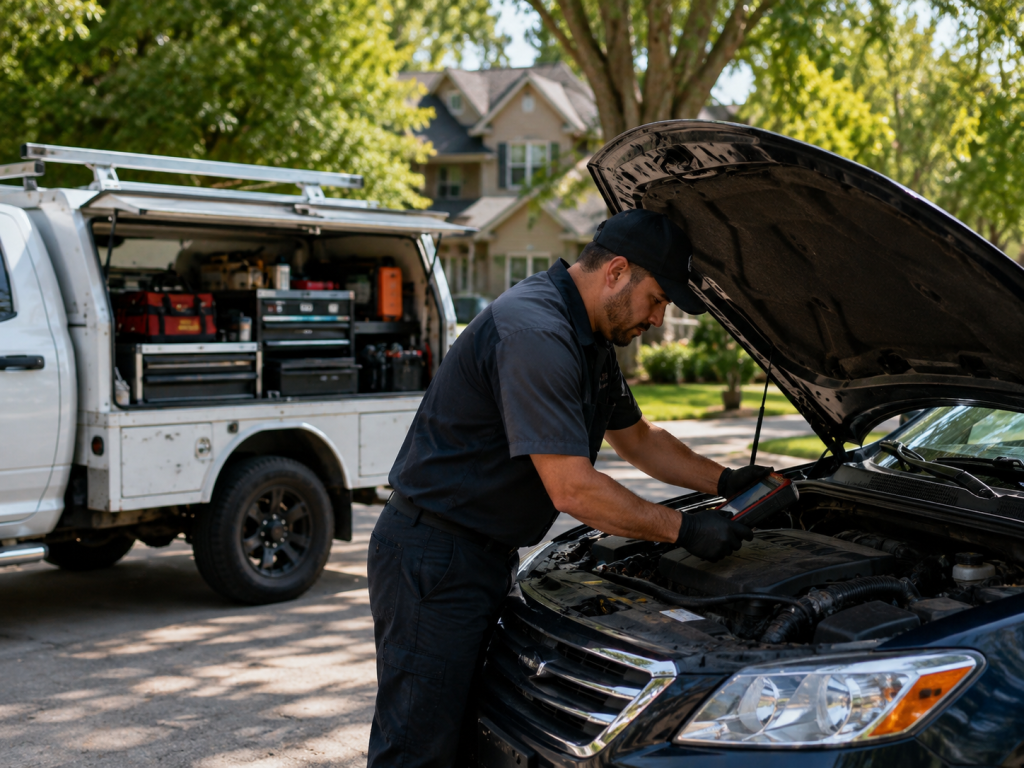
Testing a battery properly requires more than a visual glance, and waiting for a scheduled shop appointment risks missing the window before the next arctic outbreak arrives. A mobile mechanic can come to your home or workplace, test your battery’s actual cranking capacity, and replace it on the spot if needed, without requiring you to arrange a tow during the exact conditions that caused the failure in the first place.
We covered the broader advantages of this approach in our article on why mobile mechanics are better than traditional auto shops in Minneapolis, which explains how convenience and quick response times come together, particularly valuable during a season when a battery can fail with almost no warning once temperatures drop far enough.
Get Ahead Of Minneapolis’s Coldest Mornings
Minneapolis winters test batteries in a way few other climates do, and the drivers who avoid getting stranded are almost always the ones who tested their battery proactively rather than waiting to see how it performed on the coldest morning of the year. Testing battery health before the deepest cold arrives, watching for early warning signs, and choosing a battery genuinely rated for this climate are all simple ways to stay ahead of the problem.
If it has been a while since your battery was tested, visit our homepage to learn more about our services, or reach out through our contact us page to schedule a visit at your home or office anywhere in the Minneapolis area.
A little proactive attention now can help your battery hold up against everything the next Minneapolis arctic outbreak is about to bring.