
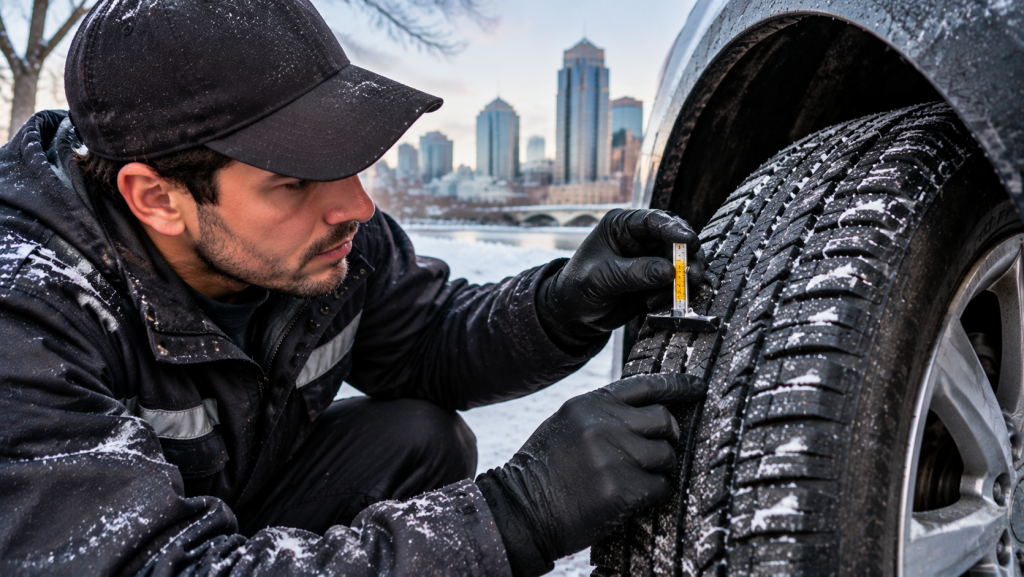
When the first snow falls in Minneapolis, the only thing between your car and the road is four patches of rubber, each roughly the size of a hand. Everything you ask of the car in winter, whether it is starting to move, stopping or turning, depends on how well those patches grip. Tires that handled summer without complaint can become a real problem on snow and ice, and the time to find out is before the storm, not during it. This guide explains how to tell whether your tires can handle winter, what to check on tread, pressure, age and condition, what the difference is between all season and winter tires, how to read the signs of a tire that is past its best and how to prepare. If you are looking for a winter tire check in Minneapolis, here is a clear and practical walkthrough.
Why Tires Matter So Much in Winter
Snow and ice reduce grip dramatically, so the tire has to do more with less. Good winter traction depends on several things working together:
- Tread depth. The grooves in the tire channel away snow, slush and water. As the tread wears down, the tire has less ability to bite into snow and clear it.
- Tread design. Deep grooves and many small slits, called sipes, help grip snow and ice.
- Rubber compound. Some tires use rubber that stays flexible in the cold. Rubber that hardens in low temperatures grips poorly, even if the tread looks fine.
- Inflation pressure. A tire with the wrong pressure does not make proper contact with the road.
- Condition. Cracks, damage and age all reduce performance and safety.
How to Check Your Tread Depth
Tread depth is the first thing to look at, since worn tires lose snow and wet traction quickly.
- Look for the wear bars. Most tires have small raised bars molded into the grooves. When the tread is worn level with these bars, the tire has reached the end of its useful life and should be replaced.
- Use a tread depth gauge. A small, simple tool gives an accurate reading. You can also ask a technician to measure it for you.
- Check several spots. Measure across the width of the tire and on all four tires. Wear is often uneven.
- Remember that the legal minimum is not the best for snow. A tire can be legal to drive and still perform poorly in snow. Tire makers and safety groups generally advise replacing tires well before they reach the legal limit if you drive in winter conditions. Ask a technician what is appropriate for your tires and your driving.
Check Tire Pressure, Because the Cold Changes It
Air pressure drops as the temperature falls, so a tire that was properly inflated in the fall can be noticeably low after a cold snap. Low pressure affects handling, wears the tire unevenly and reduces grip.
- Find the recommended pressure on the sticker in the driver’s door jamb or in your owner’s manual, not the number on the tire sidewall.
- Check when the tires are cold, before driving or after the car has been parked for a while.
- Check regularly through winter, since pressure can shift with every change in temperature.
- Do not let air out of a tire in an attempt to improve traction. Follow the recommended pressure.
- Pay attention to the tire pressure warning light, and check the pressure when it comes on.
Look for Damage and Age
- Cracks in the sidewall or between the tread blocks. These show the rubber is aging and drying out.
- Bulges or bubbles. These can mean internal damage and the tire should not be used.
- Cuts, punctures and embedded objects.
- Uneven or cupped wear. This can point to alignment, balance or suspension problems.
- Vibration while driving. It can be a sign of damage, imbalance or a separated belt.
- Age. Tires age even when they are not heavily used. A date code on the sidewall shows when the tire was made. Your tire manufacturer and owner’s manual offer guidance on how long tires should stay in service, and a technician can inspect any tire that is getting old.
All Season Tires or Winter Tires?
This is one of the most common questions drivers ask.
- All season tires are designed for a wide range of conditions. They handle light snow reasonably, but the rubber stiffens in very cold weather, and they are not built for severe winter conditions.
- Winter tires use a softer compound that stays flexible in the cold and a tread with deep grooves and many sipes made to grip snow and ice. Many are marked with a mountain and snowflake symbol on the sidewall, which indicates they meet a standard for severe snow service.
- All weather tires sit between the two and also carry the snowflake mark in many cases.
Winter tires generally offer much better grip on snow and ice and shorter stopping distances in cold conditions than all season tires, which is why many drivers in cold climates switch each year. The best choice depends on your vehicle, your driving and your budget. Ask a tire professional for advice, and check your owner’s manual for any tire requirements, such as size, load rating and speed rating.
- Use a full set of four. Mixing winter tires on one axle with other tires can upset the balance of the car and make it harder to control.
- Do not rely on four wheel or all wheel drive to stop faster. Those systems help you accelerate, but they do not improve braking or cornering grip. Tires do that.
- Store off season tires properly, if you switch back and forth.
Signs Your Tires Are Not Ready for Snow
- The tread is worn near the wear bars.
- The car slides easily when starting from a stop in light snow.
- The car takes longer to stop than it used to.
- You feel the car drift or lose grip in turns.
- The tires look cracked, dry or damaged.
- The pressure keeps dropping.
- The tires are old or have uneven wear.
- The car pulls to one side or vibrates.
Other Winter Checks That Work With Your Tires
Tires are one part of a winter ready car. Brakes, alignment and suspension all affect how the car behaves on slippery roads, and a quick inspection can catch trouble early. Our cold weather car care tips go through the other items worth checking before winter sets in. A weak battery is another common winter problem, and our article on extreme cold starts and why Minneapolis cars need winter ready batteries explains why, since good traction does not help if the car will not start.
Rotation, Balance and Alignment
- Rotation. Rotating tires evens out wear. Follow the schedule in your owner’s manual.
- Balance. Properly balanced wheels prevent vibration and uneven wear.
- Alignment. Winter potholes and curbs can knock alignment out. If the car pulls or the tires wear unevenly, have it checked.
- Inspection after impacts. A hard hit on a pothole or curb can damage a tire or wheel even if you cannot see it right away.
Driving Safely on Snow and Ice
Even the best tires have limits, so adjust how you drive.
- Slow down, and leave much more distance between you and the car ahead.
- Brake early and gently, and avoid sudden steering or acceleration.
- Know how your anti lock brakes feel, and follow your owner’s manual if the system activates.
- Clear snow and ice from the whole car before you drive, including lights, sensors and the roof.
- Do not drive if conditions are beyond what you can handle safely.
Can a Mobile Mechanic Help With Tires?
In many cases, yes. A mobile mechanic can come to your home or workplace in Minneapolis to inspect your tires, measure the tread, check and adjust the pressure, look for damage and uneven wear and rotate the tires where the vehicle allows it. Mounting and balancing new tires or swapping a set of seasonal wheels may require tire machines or a shop, depending on the equipment. A good technician will tell you what can be done where you are and what is better done in a shop.
Quick Summary
- Tread depth, rubber compound, pressure and condition decide how well tires grip in snow.
- Check the wear bars and measure tread on all four tires, and do not wait until the legal minimum.
- Pressure falls in the cold, so check often, using the recommended pressure from the door jamb or the manual.
- Winter tires generally grip snow and ice better than all season tires, and should be fitted as a full set.
- Look for cracks, bulges, uneven wear and age.
- Some checks can be done at your home, while mounting and balancing may need a shop.
A quick tire check now can make the difference between a confident winter and a scary one. If you would like help, visit the Mobile Mechanic Pros of Minneapolis homepage to learn more, or contact us to schedule a visit.